

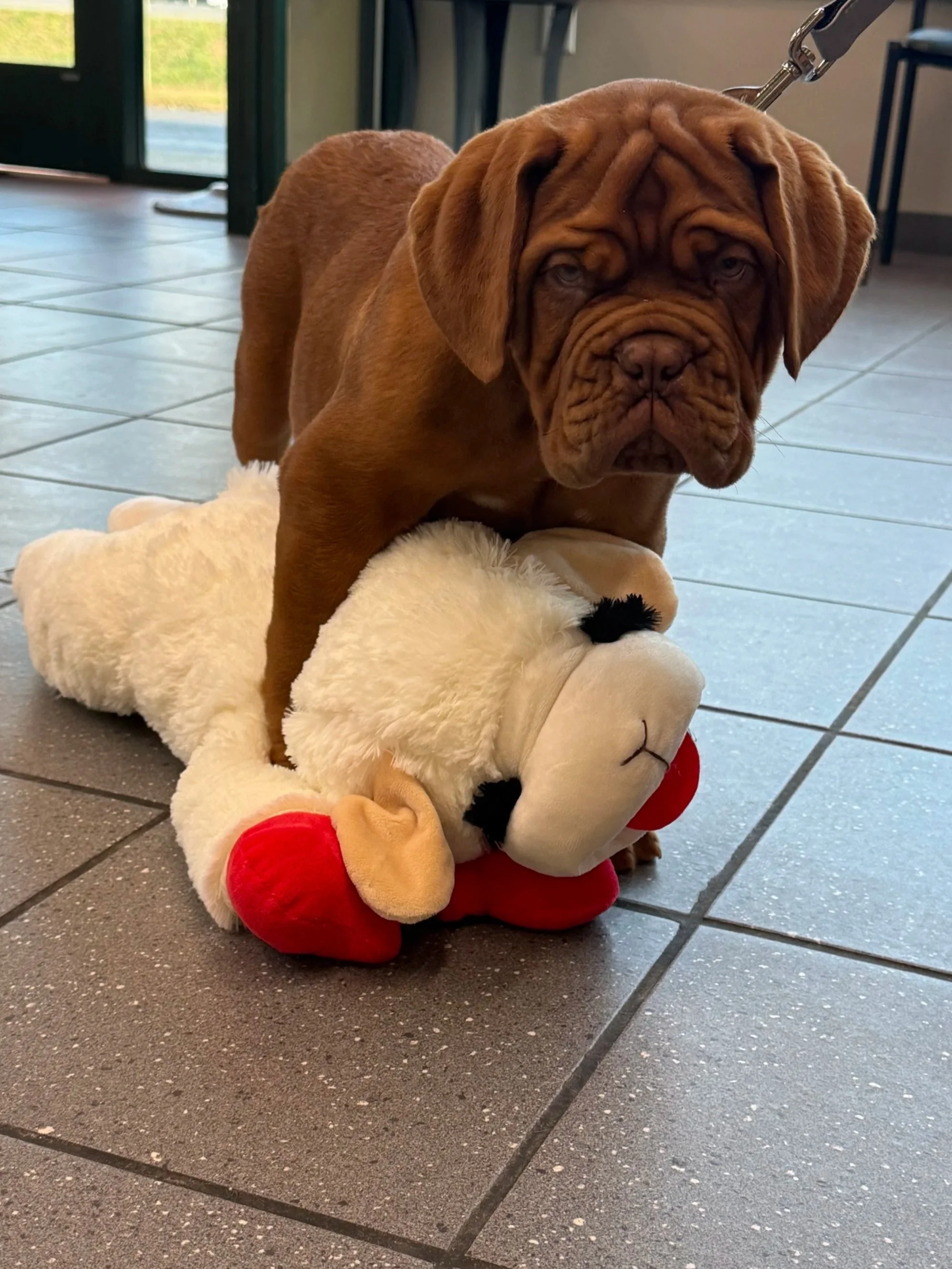
Puppy Wellness: What to Expect
Welcoming a new puppy into your family is an exciting time! At Hamilton Crossing Animal Hospital, our goal is to provide your newest family member with the best possible start in life. Because a puppy’s immune system is still developing, they require a specific series of visits to ensure they are protected against serious diseases and parasites.
Building a Foundation for Health
Each puppy visit is more than just "shots"—it’s a comprehensive wellness check. During these appointments, our veterinarians will monitor growth, discuss nutrition, and answer any questions you have about behavior or socialization to ensure your puppy grows into a healthy, happy adult.
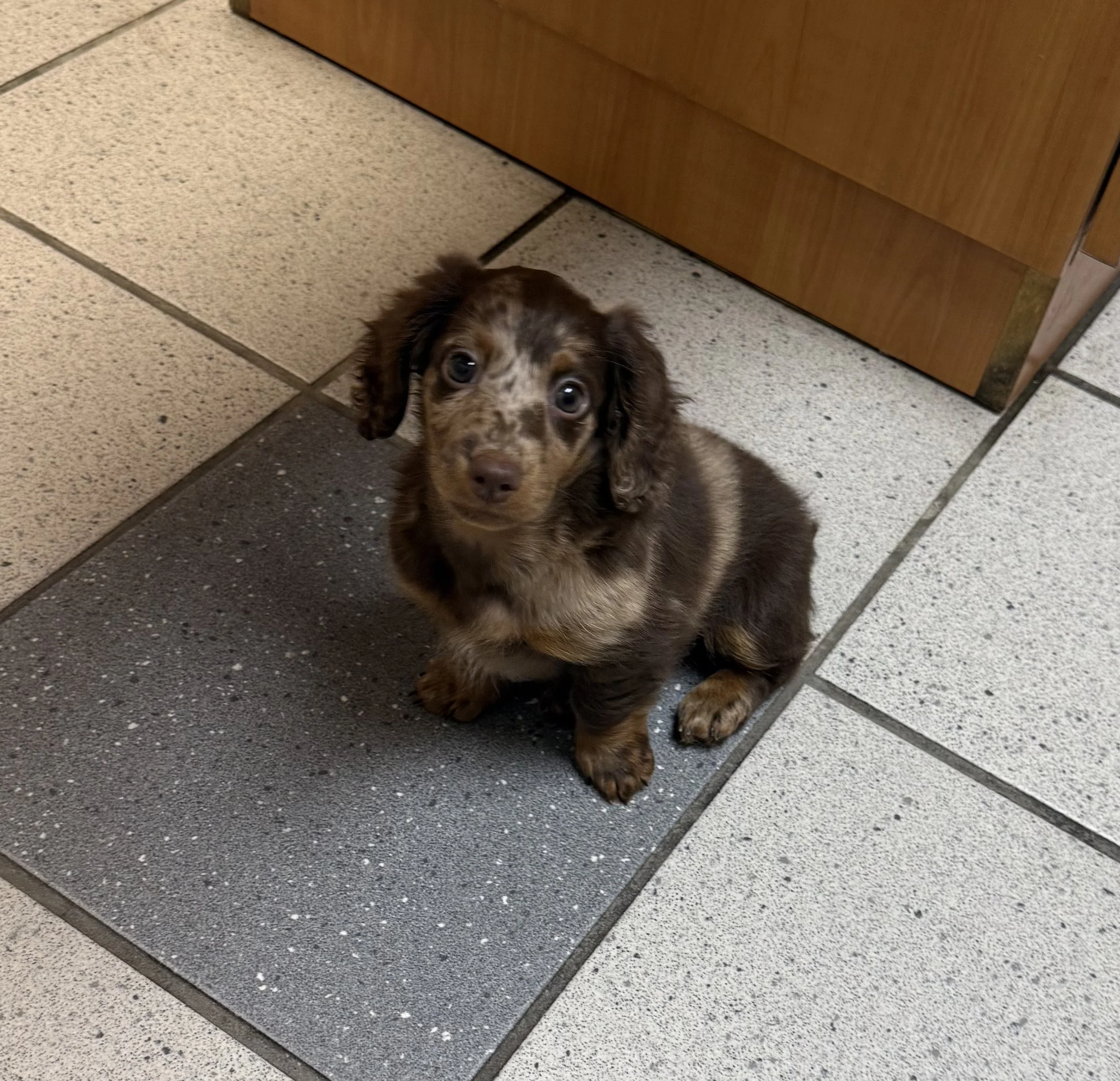
The Puppy Vaccine Series
Puppies do not receive all their protection in a single dose. Instead, they require a series of vaccines beginning at 6–8 weeks of age, with boosters administered every 3–4 weeks until they are approximately 16–18 weeks old. This schedule ensures that as the immunity they received from their mother fades, the vaccines take over to provide their own long-lasting protection.
Standard Puppy Schedule:
Round 1 : DAPP (Distemper, Adenovirus, Parainfluenza, and Parvovirus)
Round 2 : DAPP
Round 3 : DAPP, Leptospirosis, Bordetella
Round 4 : DAPP, Leptospirosis, Rabies
Note on Small Breeds: For our smaller patients, we prioritize safety. Depending on your puppy's size and weight, our veterinarians may recommend waiting to administer or adjusting the timing of the Leptospirosis vaccine to ensure their bodies handle the transition well.
Internal Parasite Protection
Why We Do Fecal Testing at Every Visit
It is our standard of care to perform a fecal exam and administer a broad-spectrum oral dewormer at every single puppy visit. There are two vital reasons for this:
The Parasite Life Cycle: Because of how parasites grow and reproduce, a puppy that tested "negative" at their first visit might have had immature parasites that weren't shedding eggs yet. By the next visit, those parasites may have matured, and the new test will catch them.
Verifying Treatment: If your puppy previously tested positive for a parasite, performing a follow-up fecal test allows us to verify that the medication worked and that your puppy is now truly parasite-free.
Puppies are incredibly susceptible to intestinal parasites, which can be passed from their mother or picked up from the environment.